Research
Since 2010, our founder and team of engineers, developers, and specialists are constantly looking at the latest updates in upper-limb prosthetics around the world and empowering industry research in order to achieve the three tenants of our mission:
1 - Build a reliable, durable, and robust product that is aesthetically pleasing.
2 - Make it waterproof to empower users to carry out everyday activities.
3 - Offer an easy, intuitive user experience that instils a sense of confidence.
That’s why we have partnered with universities and technology professionals around the world to contribute with advanced research on upper limb prosthetic devices and industry innovation.
“Using TASKA's new research hand, our partners can now field trial new technology such as sense-of-touch feedback to the user.”
Mat Jury, Founder
The future of prosthetic hands
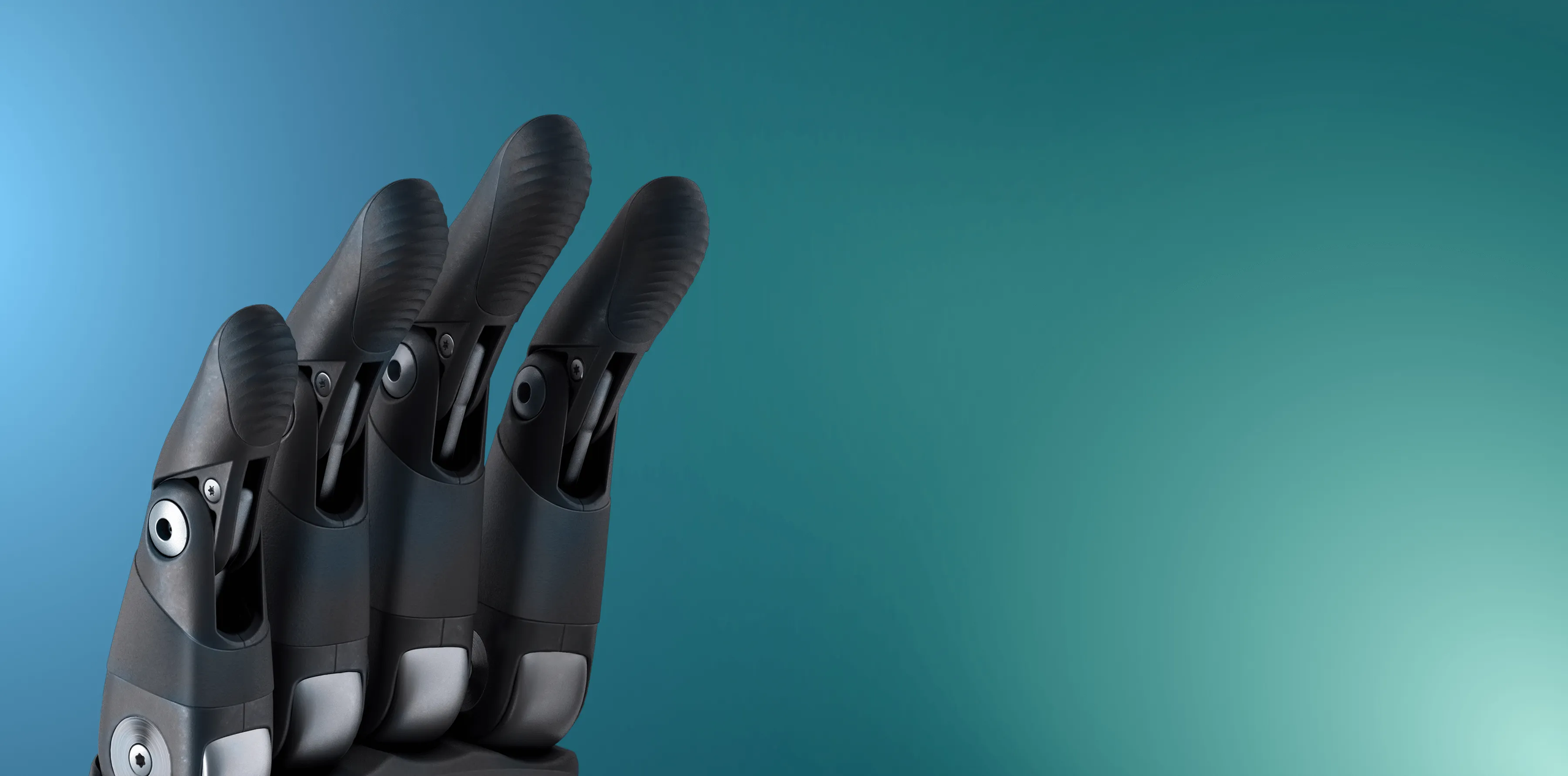
Myoelectric hands like the TASKA Hand are controlled by the electrical signals generated by the muscles in the residual limb of an individual with upper limb difference. These electrical signals are detected by sensors placed on the skin surface and processed by a microprocessor in the prosthetic hand and translated into specific movements of the fingers and thumb.
Being able to stimulate sensor neurons and selectively articulate digits in a robust way will be a significant step in upper limb prosthesis technology and may one day be considered a normal part of the rehabilitation process.
TASKA has been working with leading international universities, facilitating field trials of innovative technology, and developing partnerships to further research into this area.
Research groups TASKA is involved with


- University of Arkansas
- Shirley Ryan Abilitylab
University of Arkansas
University of Arkansas
Utilising advanced myoelectric sensors combined with implanted devices that stimulate sensor nerves on the residual limb of the patient, the Institute for Integrative and Innovative Research at the University of Arkansas have developed a complete working system on a Neural-Enabled Prosthetic Hand. They have used a TASKA HandGen2 and TASKA will supply more hands for further field trials in 2024-25.
Shirley Ryan Abilitylab
Shirley Ryan Abilitylab
In partnership with other industry leaders, TASKA Hands are being used for field trials in a project involving osseointegration and feedback stimulation, called OPRA™ Implant System. In this project, the prostheses are directly attached to the bone of the patient, which significantly improves the quality of life for individuals with amputations. Osseointegration has been in use for a few decades and has been proven successful in several clinical studies, but this unique implant system will take it to the next level and promote faster, stronger attachment to bone, thereby increasing the strength of the bone-to-implant interface.
To learn more about industry innovations and the research projects TASKA is involved in, keep an eye on our News page and social media channels, or subscribe to our mailing list below to receive our updates.